Author name: Saniya@

Beyond Google brand search across digital platforms in 2026.
Digital Marketing

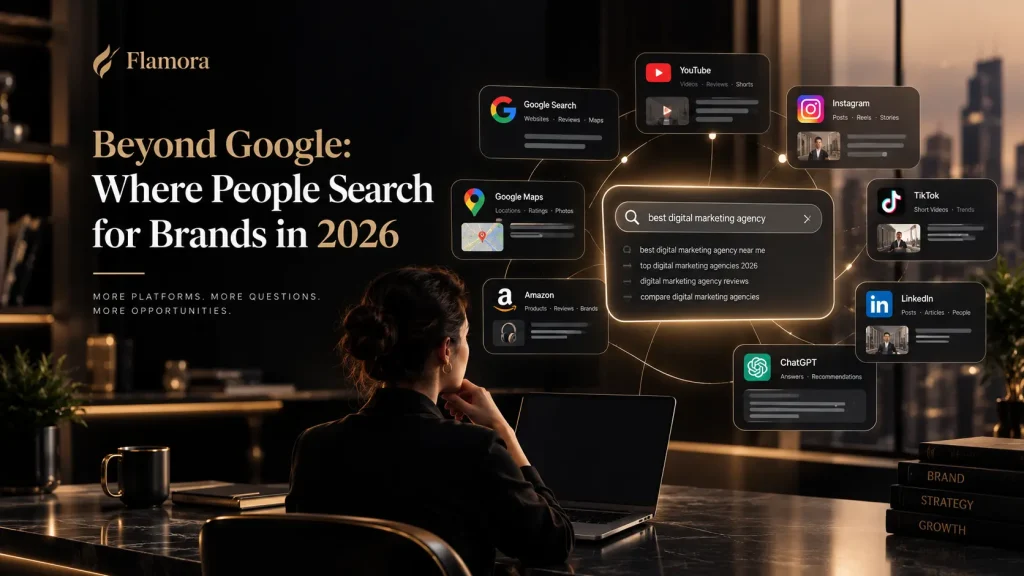
Beyond Google: Where People Search for Brands in 2026

Introduction For years, Google was once the starting point for online research. Someone wanted to find a product, service, company or an answer to their question so they used search engines, compare several websites and make a decision. But now, people don’t discover a brand the same way as before. In 2026, the different sources are Google, AI assistants, YouTube, Instagram, TikTok, Reddit, marketplaces, maps, creators, etc. So search is no longer about one particular engine, but rather about visibility in multiple channels. Google themselves describe the customer journey today as a fluid path with customers searching, scrolling, streaming, shopping and more.
AI citation strategies for ChatGPT, Gemini, and Perplexity.
Artificial Intelligence & Search

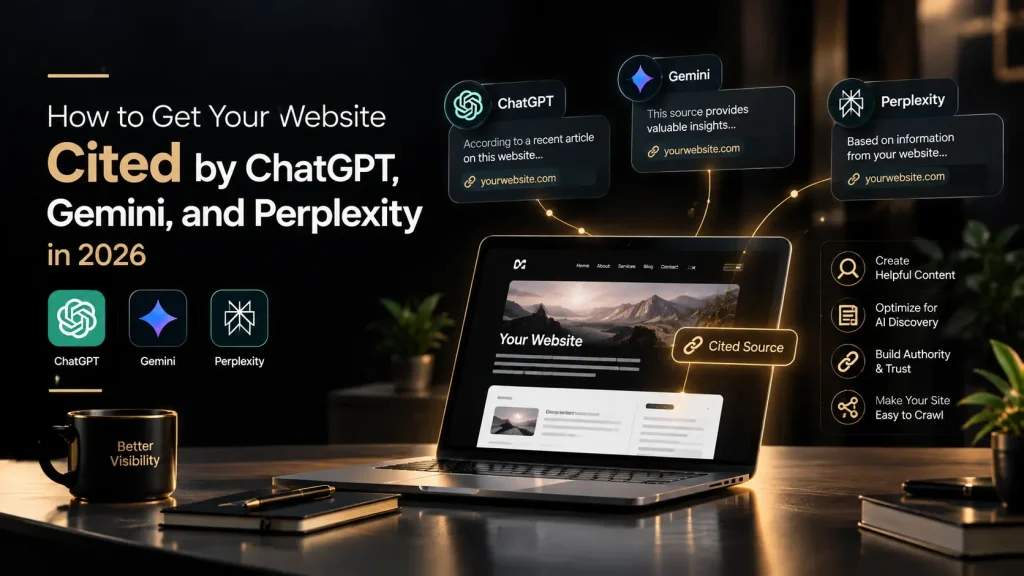
How to Get Your Website Cited by ChatGPT, Gemini, and Perplexity in 2026

Introduction Search is evolving from “find a website” to “get an answer.” In the past someone might type something into Google, open up a bunch of links, compare the information, and then make a determination on the best source. AI powered search experiences offer the ability to summarize information, answer follow up questions, and provide links to supporting sources. ChatGPT Search can show citations and links to web sources, Gemini can provide related sources, and Perplexity is built around cited answers. That’s a huge shift for SEOs and content marketers: it’s a new visibility opportunity. Your website doesn’t need to just rank in traditional search results, it needs to answer and be able to be understood, evaluated, and referenced by AI powered search experiences. But there isn’t some secret button that makes a website get cited. It’s about building content around usefulness, relevance, clarity, authority, accessibility, and strong search fundamentals.

AI and human thinking in digital marketing.
Artificial Intelligence & Search

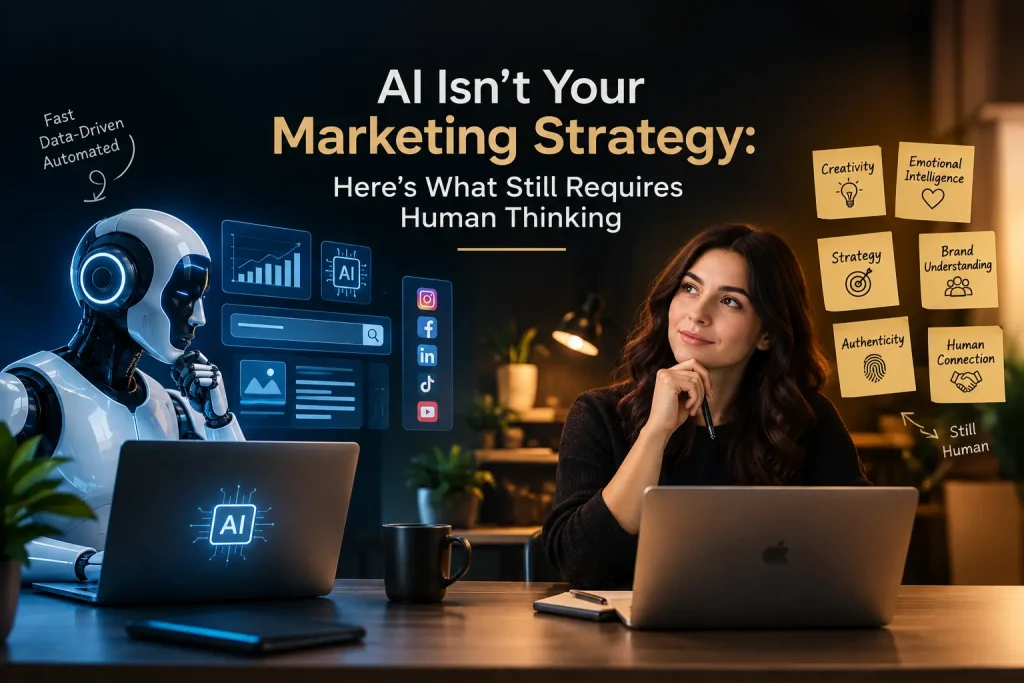
AI Isn’t Your Marketing Strategy: Here’s What Still Requires Human Thinking

Introduction AI changed digital marketing for the better within a short period of time. Nowadays, marketing professionals are using artificial intelligence to find content ideas, create drafts, analyze data, design visual elements, automate repetitive tasks, personalize communication and support conversations with customers. As a result, marketing became more productive and, in many cases, more efficient. There is 1 thing that many businesses fail to consider. AI is simply a tool that helps with marketing Giving an AI a prompt and publishing its output doesn’t immediately result in a marketing success. In fact, there is no marketing strategy behind it at all. A good marketing strategy is always focused on specific customers, addresses their problems, defines the brand’s position, differentiates it from competitors, sets marketing goals and decides which channels to use. While AI can help with some of these points, humans are ultimately responsible for most of them. The future of marketing doesn’t have to be about AIs replacing humans; it’s rather about the best ways of combining automation and human efforts.

Digital marketing in the age of AI answers.
Digital Marketing

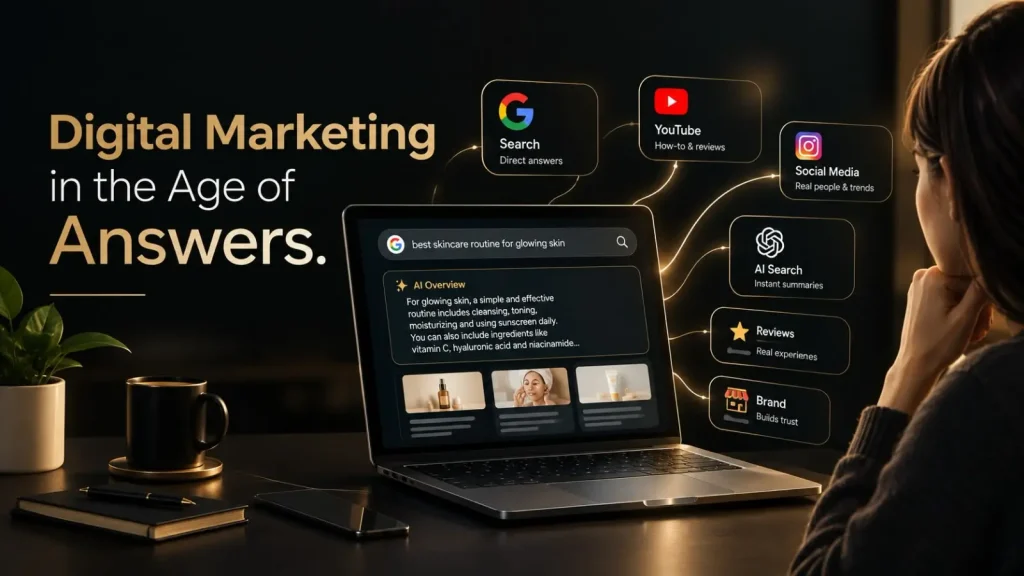
Digital Marketing in the Age of Answers

Introduction For years, digital marketing was based around a simple cycle: Search → Click → Website → Explore → Convert A customer would search for something on Google, click the site, read the content, compare options and make a decision But the way people find information is evolving Google is becoming more conversational and answer focused and offers AI-powered experiences such as AI Overviews and AI Mode where users can ask complex questions, receive synthesized answers and continue with follow-up questions while still having links to explore the web. This poses a challenge for marketers Your audience may consume information before they visit your website This means that digital marketing can no longer be based around clicks, website traffic and rankings but rather brands should begin to consider the question of how they can be the brand that people discover, trust and remember when they are looking for answers This is what digital marketing looks like in the Age of Answers.

New SEO funnel from discovery to conversion.
SEO

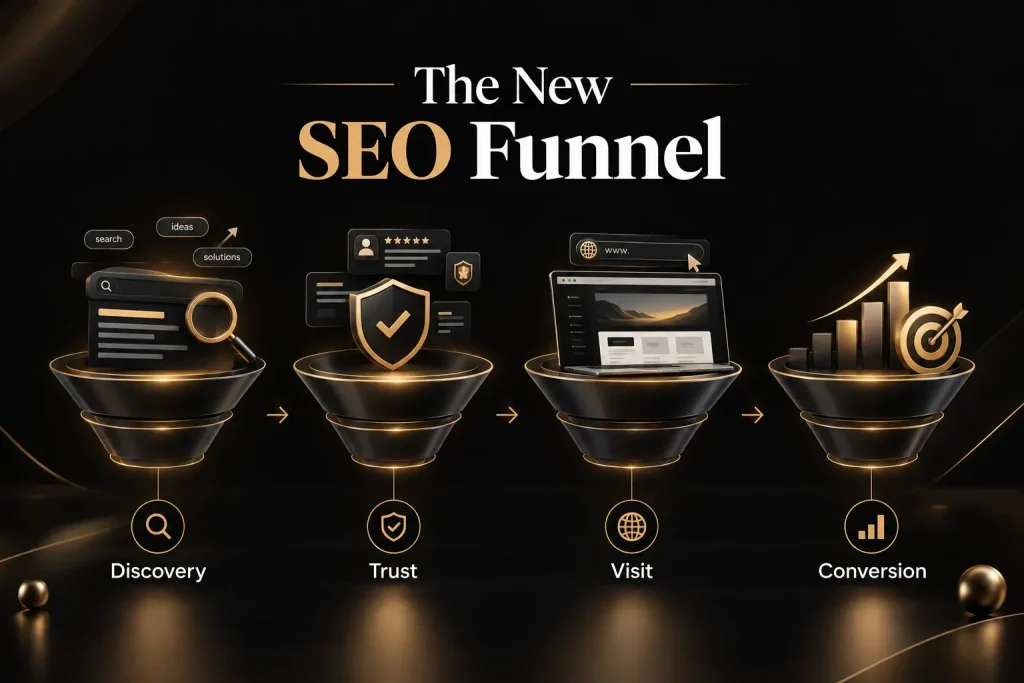
The New SEO Funnel: Discovery → Trust → Visit → Conversion

Introduction Search engine optimization (SEO) has long been associated with increasing website traffic. Companies research keywords, optimize pages, acquire links, publish articles, and analyze statistics to improve the quantity and quality of visitors to a particular web page. However, an emerging paradigm of SEO leaves aside the ultimate goal of attracting and focuses on other aspects such as conversion rates or engagement. The reason for this shift is that users may come across a company in different ways: a Google search result, a Google feature snippet, a YouTube video, a social media post, a review, and so on. It means that traffic is not the only metric that should be considered when evaluating the success of a company’s SEO efforts. In many cases, users interact with a firm’s link several times before they decide to make a purchase on its website. Therefore, it is possible to talk about the conversion funnel from acquisition to conversion: Discovery → Trust → Visit → Conversion A new perspective on SEO suggests that companies should focus on all stages of the funnel. Thus, apart from optimizing the website to get more traffic, firms should also work on their conversion rates.

SEO ranking beyond #1 and organic growth.
SEO

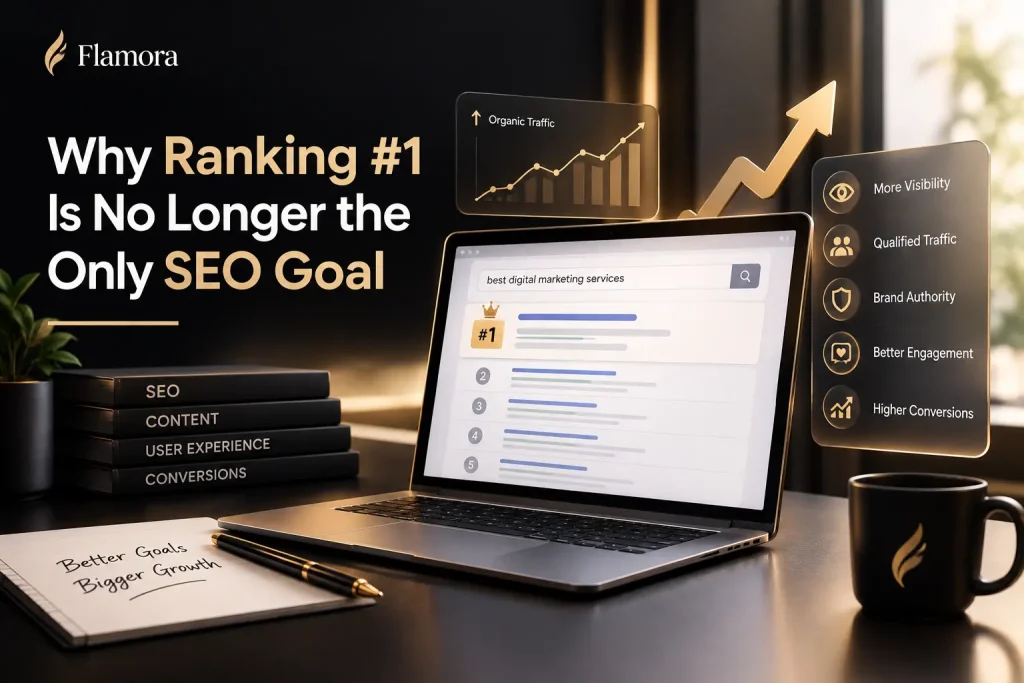
Why Ranking #1 Is No Longer the Only SEO Goal

Why Ranking #1 Is No Longer the Only SEO Goal Introduction For a very long time, a big question in the SEO world was “Are you ranking number 1 on Google?” The reason why it was so important was that the higher your website showed up in the search engine results pages (SERP), the more traffic you would get to your website. This was seen as desirable because it meant more eyeballs on your site and more potential customers. But people are becoming harder to please. More and more discover new products and services through other means than traditional Google searches. People can now discover you through google’s AI, snippets, maps, videos, social media, forums, reviews, and many other places. And some searches are even answered directly on the SERP, meaning they never have to click on a website. This doesn’t mean rankings aren’t important, they most definitely still are. But, they don’t tell you the whole story about your search visibility and presence. In this day and age, SEO is now about being able to influence the SERP at the right time to get eyes on your content, get people to trust you, and get them to convert in whatever way you want them to. Notice: JavaScript is required for this content.

Search Everywhere Optimization for brand visibility.
SEO

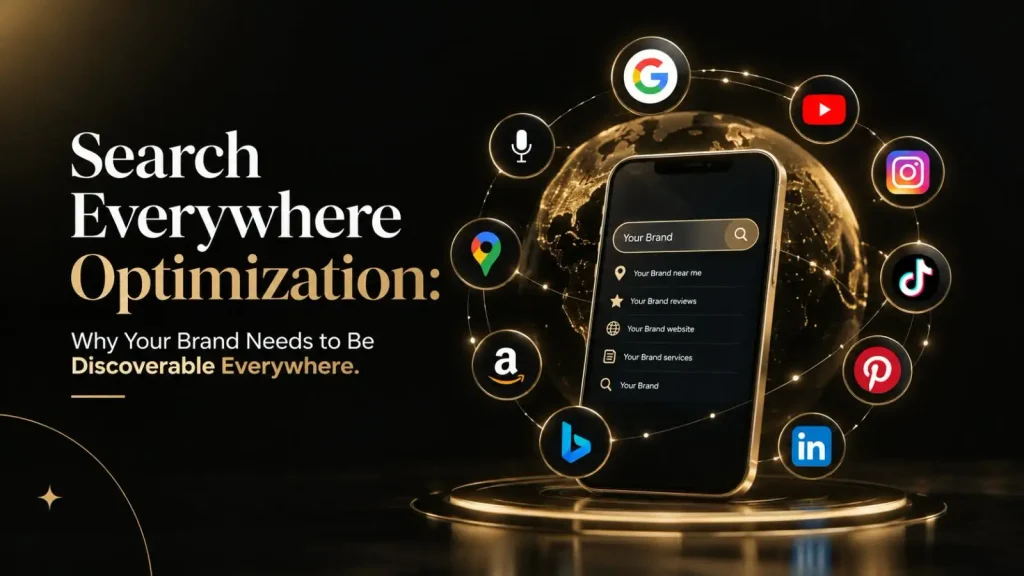
Search Everywhere Optimization: Why Your Brand Needs to Be Discoverable Everywhere

Search Is No Longer Just Google Years ago, when people talked about search, they typically meant Google. However, nowadays there are multiple avenues for people to find information, products and brands. They can use Google, or turn to YouTube, Instagram, TikTok, LinkedIn, Reddit, maps, AI-assisted search platforms or any number of other resources to find exactly what they are looking for. This creates a new opportunity for brands to be found by people searching in any of these venues which is why Search Everywhere Optimization is important. Notice: JavaScript is required for this content.

Digital marketing analytics turning data into smarter decisions.
Digital Marketing

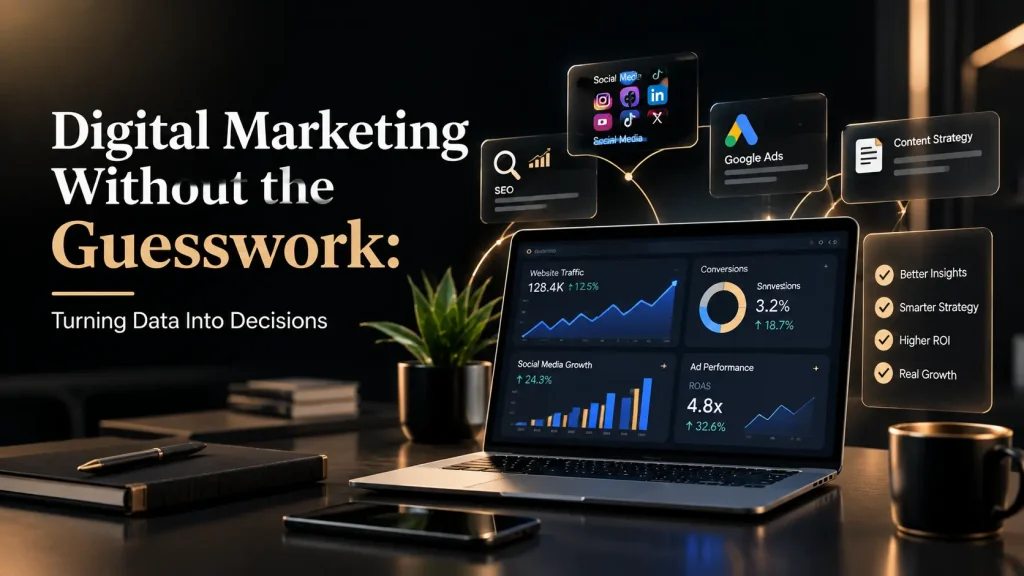
Digital Marketing Without the Guesswork: Turning Data Into Decisions

Stop Guessing, Start Knowing Digital marketing provides companies with more information than ever about their business. Visitors to websites, engagement analytics, sources of leads, and campaign performance are all very important. However, this information is useless without context and direction. Interpreting data and taking action on it is the difference between collecting information and successfully analyzing it to make better marketing decisions.

Zero-click marketing across search, AI, and social media.
Digital Marketing

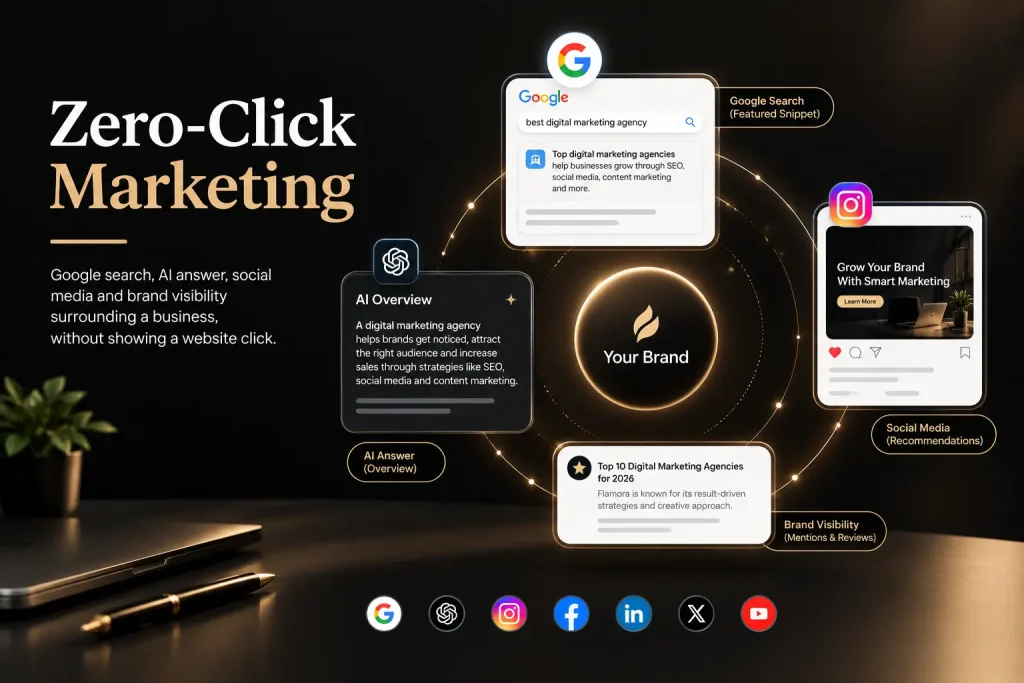
Zero-Click Marketing: How Brands Can Win Without Website Visits

Introduction: Marketing Is Changing Not every customer has to visit the website. In today’s world, they can use Google and search engines to find out information from rich snippets, Google business profiles, social media, artificial intelligence, and much more. This is why zero-click marketing is so important nowadays. In this case, brands should invest more effort and money into gaining visibility, usefulness, and brand image outside the website. Notice: JavaScript is required for this content.

Content gets high views and engagement but no customers
Digital Marketing

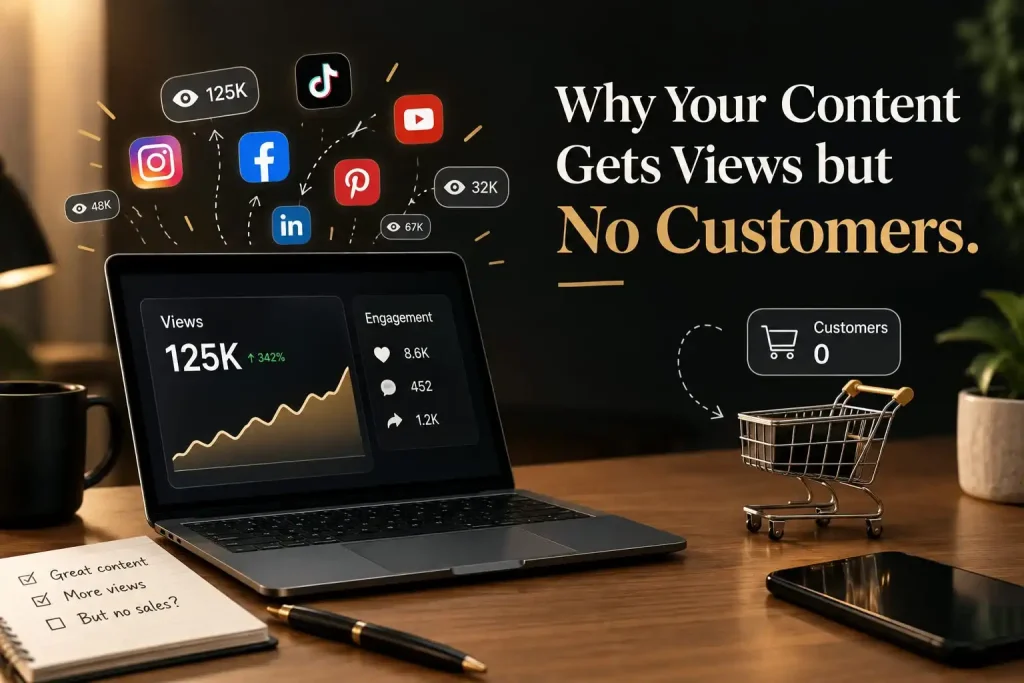
Why Your Content Gets Views but No Customers

Introduction: Views Are Not the Same as Results Getting views is a great sign that your content is resonating with people. But what if thousands of people are seeing your content and almost none are becoming customers? That’s a problem many companies face. Your content might be getting lots of: • Views • Likes • Shares • Comments • Traffic • But very few: • Leads • Inquiries • Bookings • Sales The issue could be something else besides traffic quantity. Sometimes it’s about what happens after people see your content.

Scroll to Top