
Social Media Marketing Is Changing
Social media is no longer a place to just post and collect likes.
In 2026 businesses need to start focussing on attention, relevance, trust, engagement and results.
People are consuming more short-form video than ever before, engaging with content through comments and messages and demanding more useful and authentic content than ever before.
So just hammering out content daily is no longer enough.
The first step to a successful social media strategy in 2026 is knowing your audience, and providing them with content that makes them want to stop scrolling, watch, engage or take action.
What Is Social Media Marketing?
Social media marketing refers to the use of social networks to raise awareness of a business, interact with its target audience, promote its brand, products or services and meet marketing objectives.
Businesses can use social media platforms to achieve their marketing goals. Some examples of social networks are:
● Instagram
● Facebook
● LinkedIn
● YouTube
● TikTok
● Snapchat
● Pinterest
The choice of which one to use will depend on the target audience, type of business and marketing goals.
Why Social Media Marketing Matters in 2026
Social media provides businesses with opportunities to engage with their niche.
Using social networks to promote a brand can
lead to increased sales,
● Brand awareness,
● A better-performing website,
● A stronger brand image,
● More customers and Business leads
● Building relationships with the target audience.
But when evaluating progress, companies should go beyond the number of followers, paying special attention to engagement rates, traffic, leads, conversions, and other important metrics
Social Media Marketing Strategies That Actually Work in 2026
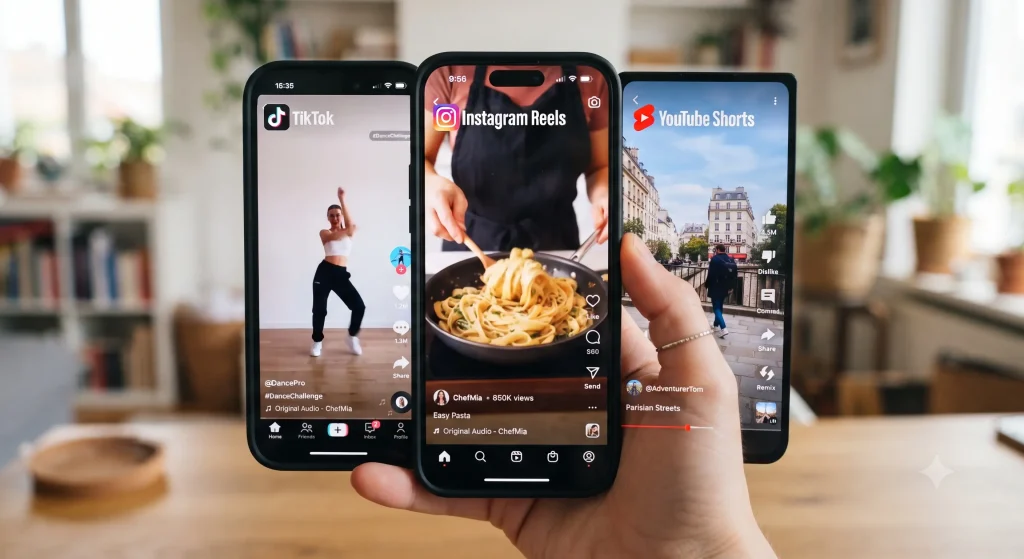
1. Create Short-Form Video Content
Short-form video is still a critical channel for engagement.
You can use video to:
• Explain your product
• Answer Frequently Asked Questions
• Give advice or guidance
• Show the behind-the-scenes
• Demonstrate how your service works
• Tell your brand story
Additionally, for B2B brands, LinkedIn is also promoting video as a format that drives awareness, consideration and even conversion when the content is aligned to the campaign objective.
2. Focus on Value and Not Only Promotion
Consumers don’t want to see only advertisements.
They want content that can provide value to them.
Therefore, you can include different types of content, such as:
• Educational: “5 SEO mistakes small businesses should avoid”
• Inspirational: “How a small brand grew its online presence”
• Entertaining: Some short marketing content
• Promotional: Your product, service or special offer
3. Use Platform-Specific Content
Although it may seem counterintuitive, the same piece of content should not appear in the same format across different platforms.
For example:
• Instagram: Focuses on Reels, carousels and visual content
• LinkedIn: Professional content, such as case studies and thought leadership
• YouTube: Educational and long-form videos
• Facebook: Community-oriented content
• Tik Tok: Short, funny and entertaining content
The core message can be the same, but the format should change depending on the platform.
4. Use AI to Work Smarter
Artificial Intelligence can be a great tool for social media marketing.
However, it should not replace your creativity, but instead, empower and accelerate it.
Some of the ways that you can use AI in social media marketing are:
• Generating ideas for your content
• Writing caption drafts
• Planning your content calendar
• Researching your audience
• Creating concepts
• Analyzing the performance of your posts
• Repurposing your content
5. Build a Community
Social media marketing is not only about distributing content – it is about building relationships.
Engage with your audience by responding to comments, asking for their opinions, and replying to any questions they may have.
In addition, make sure to participate in any discussions involving your brand.
By doing that, you will be able to transform passive followers into active and engaged members of your brand community.
6. Use Social Proof
Consumers want social proof before they commit to buying from you.
Therefore, make sure to use customer reviews, testimonials, case studies, user-generated content and before-and-after content to establish trust and reduce friction in the decision-making process.
Organic vs Paid Social Media Marketing
Social Media Strategy Breakdown
Comparing Organic vs. Paid Approaches
| 🌱 Organic Social Media | 🚀 Paid Social Media |
|---|---|
| Builds audience over time | Can reach targeted audiences quickly |
| Uses regular content | Uses advertising campaigns |
| Focuses on engagement and community | Focuses on specific campaign objectives |
| No direct ad spend required | Requires advertising budget |
| Useful for long-term brand presence | Useful for targeted reach and campaigns |
Create a Simple Social Media Content Strategy
A practical content mix can comprise of:
40% Educational Content
This consists of Tips, guides, tutorials and useful information.
30% Engagement Content
This comprises of Questions, polls, discussions and interactive posts.
20% Brand Content
This consists of Behind-the-scenes posts, team stories and company updates.
10% Promotional Content
This comprises of Products, services, offers and CTAs.
It must be emphasized that these percentages are a planning framework and not a hard and fast rule. Your ideal content mix will be determined by your audience and business goals.
Track the Right Social Media Metrics
Followers are just a minuscule of social media’s potential.
One should track several metrics.
Some of the vital ones include:
● Reach
● Engagement rate
● Video views
● Watch time
● Shares
● Saves
● Website clicks
● Leads
● Conversions
The most relevant metrics depend on the goals.
For example, if the aim is to gain awareness, reach and video views are the ones to monitor.
In case of wanting to increase engagement, comments, shares, and saves would be the way to go.
On the other hand, website clicks demonstrate progress in traffic generation.
Leads and conversions are essential for lead generation and sales, respectively.
Common Social Media Marketing Mistakes
Posting Without a Strategy
One cannot create a brand persona by just randomly posting.
Focusing Only on Followers
Having many followers does not necessarily translate to increased sales.
The comments and messages are ignored.
Social media is a communication channel, so it should work both ways.
Using the Same Content on Different Platforms
Every social media platform has a different target audience. Therefore, the contents posted on these sites should also be different.
Overusing Promotion
Promotions should be used sparingly to avoid annoying followers.
Not Tracking the Results
The results of these social media activities should be monitored to see which produces results and which do not.
Social Media Marketing in 2026: The Key Takeaway
Frequently Asked Questions
What is the best social media strategy for 2026?
There is no one-size-fits-all social media strategy. However, combining valuable content, short-form video, community building, platform-specific know-how and analytics will provide an excellent basis for social media success in 2026.
Is social media marketing still effective in 2026?
Yes, social media is still a vital channel for brand building, audience engagement, relationship marketing and digital promotion. The focus should be on strategic fit for purpose, not vanity metrics.
Should we use AI for social media marketing?
AI can support social media marketing in research, ideation, planning and analytics, but human creativity and brand guardianship should still play a key role.
Should I focus on organic or paid social media?
A balanced mix of both organic and paid social media is ideal. Organic social media content marketing helps to build long-term brand equity while paid social media can provide impressive short-term results.
Conclusion
Social media marketing in 2026: it’s all in the details, because it’s more than just posting things.
A company needs to know what people want, which channels they use and what content works there, how to make videos, how to build relationships and track the right metrics.
With the help of these and many other tools, social media marketing can become a powerful asset to any online marketing strategy.