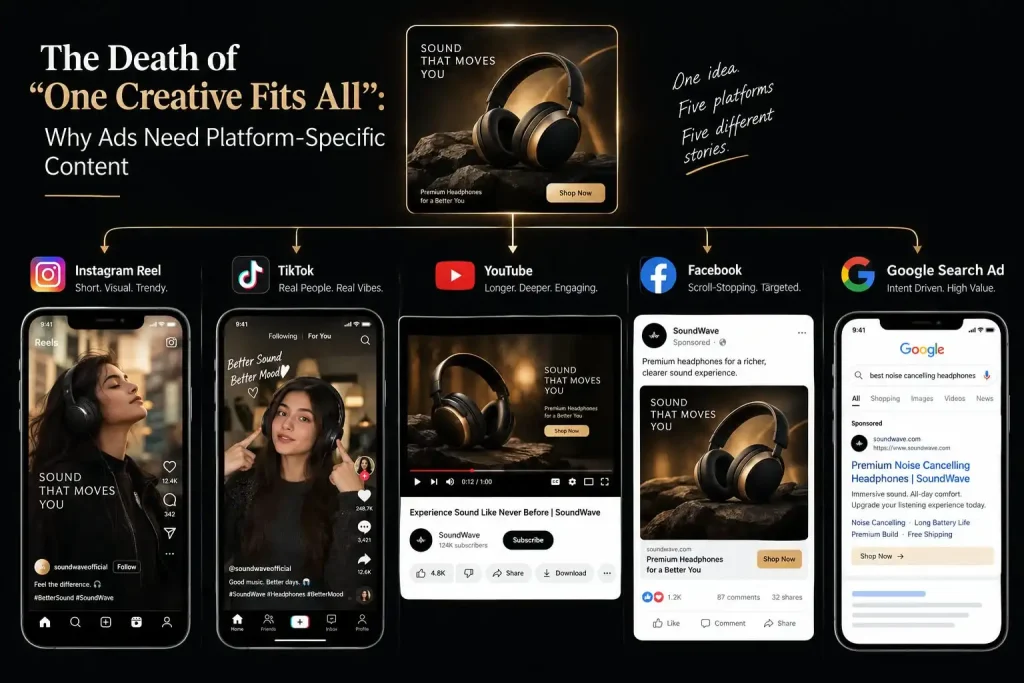
The Death of “One Creative Fits All”: Why Ads Need Platform-Specific Content
Introduction For years now, companies have been creating single advertisement and publishing it everywhere. The same video can be found on Instagram, Facebook, YouTube, TikTok and other platforms. Same headlines, same images and same CTA are simply adapted to fit different screen sizes. While it saves time, it doesn’t necessarily provide the best experience since today, different platforms have different audiences and formats. Someone who watches a short Reel is clearly in a different mindset than someone who googled a query and landed on your article or watches a long YouTube video. Modern advertising now focuses more on “create one core idea and then adapt it for all platforms” rather than the old “build once, deploy everywhere” paradigm. Google’s official advertising guidelines also reflect this new reality, where different assets are now more important than a single creative, and testing different combinations is now the norm, rather than pushing the same image/video/headline everywhere. Why One Ad Doesn’t Work Everywhere Imagine that a brand has created a beautiful 30-second product video. It looks great on an Instagram Reel. The brand decides to post the same video on YouTube Shorts. It utilizes the same creative for a Facebook campaign. And it crops the video for another ad. The message is the same, but the context is different. Each social media site has its own: Viewership habits Content conventions Screen sizes Audience expectations Attention spans Creative preferences And interaction styles The message should adapt to these differences. A brand should not modify its entire value proposition based on the delivery medium. However, it should update the presentation of its message.