
September 29, 2026

AI citation strategies for ChatGPT, Gemini, and Perplexity.
Artificial Intelligence & Search

How to Get Your Website Cited by ChatGPT, Gemini, and Perplexity in 2026

Introduction Search is evolving from “find a website” to “get an answer.” In the past someone might type something into Google, open up a bunch of links, compare the information, and then make a determination on the best source. AI powered search experiences offer the ability to summarize information, answer follow up questions, and provide links to supporting sources. ChatGPT Search can show citations and links to web sources, Gemini can provide related sources, and Perplexity is built around cited answers. That’s a huge shift for SEOs and content marketers: it’s a new visibility opportunity. Your website doesn’t need to just rank in traditional search results, it needs to answer and be able to be understood, evaluated, and referenced by AI powered search experiences. But there isn’t some secret button that makes a website get cited. It’s about building content around usefulness, relevance, clarity, authority, accessibility, and strong search fundamentals.
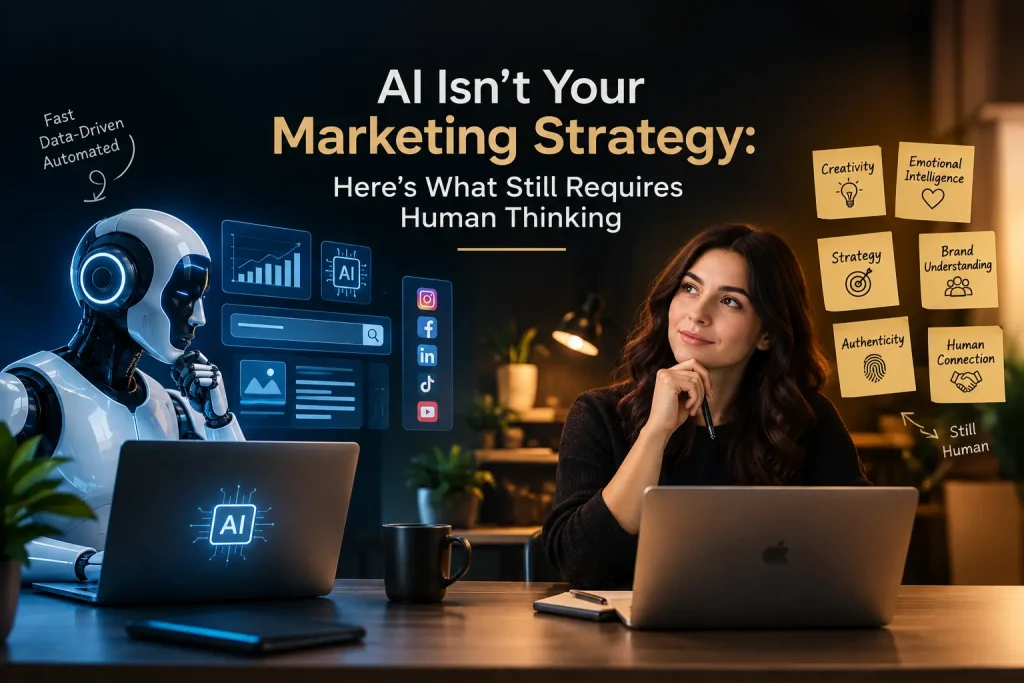
AI and human thinking in digital marketing.
Artificial Intelligence & Search

AI Isn’t Your Marketing Strategy: Here’s What Still Requires Human Thinking

Introduction AI changed digital marketing for the better within a short period of time. Nowadays, marketing professionals are using artificial intelligence to find content ideas, create drafts, analyze data, design visual elements, automate repetitive tasks, personalize communication and support conversations with customers. As a result, marketing became more productive and, in many cases, more efficient. There is 1 thing that many businesses fail to consider. AI is simply a tool that helps with marketing Giving an AI a prompt and publishing its output doesn’t immediately result in a marketing success. In fact, there is no marketing strategy behind it at all. A good marketing strategy is always focused on specific customers, addresses their problems, defines the brand’s position, differentiates it from competitors, sets marketing goals and decides which channels to use. While AI can help with some of these points, humans are ultimately responsible for most of them. The future of marketing doesn’t have to be about AIs replacing humans; it’s rather about the best ways of combining automation and human efforts.

Scroll to Top